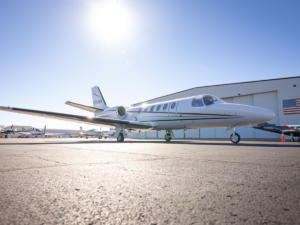
The FAA’s recent decision to end certain single-pilot exemptions for legacy Citation aircraft has created plenty of conversation among owners, pilots, training providers, and insurers.
For owners who have operated these aircraft single-pilot for years, it’s a significant change. But it doesn’t automatically mean it’s time to sell the airplane.
At Lone Mountain Aircraft, our first priority is helping owners understand what has changed and what their options actually look like.
“Slow down, explain the facts, and help people stay in airplanes that still fit their mission when that makes sense. Trust beats panic every time,” said Mark Rogers, CEO of Lone Mountain Aircraft.
That’s the approach we’re taking. Before making a major ownership decision, understand what continuing to operate your Citation could look like, what adding a qualified Second-in-Command (SIC) means, and what questions you should be asking your training provider and insurance broker.
What Actually Changed?
Certain legacy Citation models were originally certified for two-pilot operations. For years, exemptions provided a path for qualified pilots to operate many of these aircraft single-pilot under specific conditions.
With the FAA’s recent change, affected aircraft will need to be operated with two qualified pilots.
The affected legacy Citation models include the Citation/Citation I, Citation II, S/II, Citation V, Ultra, Bravo, Encore, and Encore+. [Read the FAA’s Full Notice Here]
For owners who have already been operating with two pilots, the practical impact may be limited. For those who purchased and operated these aircraft specifically for their single-pilot capability, there is more to consider.
First, Understand the Keep-the-Airplane Option
One of the first reactions we’ve seen is the assumption that affected owners will need to sell their aircraft and move into something else.
That’s one option. It isn’t the only one.
For many owners, the first question should be whether continuing to operate the aircraft with a properly qualified SIC makes sense for their mission.
We recently spoke with Tom Hague of Wings Insurance about what this change could mean from an insurance standpoint. His perspective was considerably less dramatic than some of the early conversation surrounding the announcement.
There continues to be insurance capacity for these aircraft, and moving from a single-pilot to a two-crew operation may create some advantages from an underwriting perspective. The specifics will vary by owner, aircraft, pilots, and carrier, which is why your insurance broker should be one of your first calls.
The important point is this: don’t assume adding an SIC automatically makes keeping your aircraft impractical. Run the numbers first.
What Does Qualifying an SIC Actually Involve?
A pilot serving as SIC does not necessarily need the same qualification as the pilot acting as PIC.
FAR 61.55 outlines requirements for pilots serving as Second-in-Command aboard aircraft requiring more than one pilot. For certain domestic operations, that can provide a path for an SIC to receive the appropriate training and qualification without completing the same full type-rating process required to act as PIC.
That doesn’t mean simply putting another pilot in the right seat.
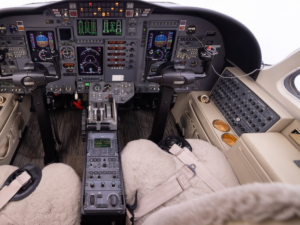
The SIC should understand the aircraft, its systems and procedures, and his or her responsibilities as a required crewmember. Owners should work directly with their training provider to determine exactly what is required for their operation.
There’s also an important operational consideration: the right SIC should reduce workload, not add to it.
Bringing another pilot into a cockpit you’ve operated alone for years changes the dynamic. Training, communication, defined responsibilities, and crew coordination matter.
What Are Insurers Looking For?
This is where talking to your broker early becomes important.
According to Hague, insurers will look at factors including the SIC’s total time, experience, training, and the specifics of the operation. An SIC who doesn’t meet an insurance policy’s open-pilot requirements may not necessarily be out of consideration either. In some cases, the pilot can be submitted to the underwriter for individual approval.
Hague also expects moving to two-crew operations to affect the insurance equation itself. In his experience, two-crew operations can result in lower base premiums and may provide access to higher liability limits depending on the account.
That doesn’t mean insurance savings will completely offset the cost of adding another pilot. It does mean the calculation is more nuanced than simply adding an SIC day rate to your existing operating costs.
Talk with your broker. Present the pilot you’re considering. Understand what your carrier requires. And if necessary, understand what other insurance markets may be available.
What Could Adding an SIC Cost?
The answer depends heavily on how much you fly and how you use the aircraft.
An owner flying 50 hours annually has a very different calculation than an owner flying 200 hours. The availability of qualified pilots in your area, training requirements, travel, day rates, and insurance changes all factor into the equation.
Rather than starting with an industry average, start with your operation.
How many days per year will you actually need an SIC? What training will your carrier require? What will happen to your insurance premium? Is there a qualified pilot nearby? Could you coordinate training or pilot resources with another Citation owner in your area?
Once you have those answers, you can compare the actual cost of keeping your aircraft against the cost and disruption of transitioning into something else.
Keep or Transition?
There isn’t one answer that works for every Citation owner.
If you know your aircraft, it continues to fit your mission, and adding a qualified SIC works operationally and financially, keeping it may make perfect sense.
If the ability to operate single-pilot was one of the primary reasons you selected the aircraft, this change may cause you to look at other options.
Both are reasonable conversations to have.

What we don’t recommend is making that decision based solely on the initial reaction to the FAA announcement.
Before deciding, understand:
- what adding an SIC would actually require for your operation
- what your insurance carrier will require
- what the change means for your annual operating costs
- what your aircraft is worth in the current market
- what transitioning into another aircraft would realistically cost
Then compare the two.
How Lone Mountain Aircraft Can Help
Our role isn’t to convince every affected Citation owner that it’s time for another airplane.
If keeping your current Citation makes sense, we’re happy to help connect you with resources and people who can help you understand the training, insurance, and operational considerations involved.
If you’re evaluating whether the aircraft still fits your mission, our team can also provide a current market assessment and help you understand what alternatives may be available.
The market will continue to respond to this change, and training and insurance practices will become clearer as owners, operators, providers, and insurers work through it.
For now, the best place to start is simple: understand how the change affects your specific operation before deciding what comes next.
Connect With Our Team
If you operate an affected Citation and have questions about keeping your aircraft, its current market position, or potential alternatives, our team is here to help you understand the options. Contact Spencer Bain, Jet Sales Director via phone at +1.630.414.1293 or email him for more information.